Low-temperature vacuum extraction (LT)
Extraction under low temperature and reduced pressure limits the loss of heat-sensitive aroma compounds — for formulations where the scent itself matters.
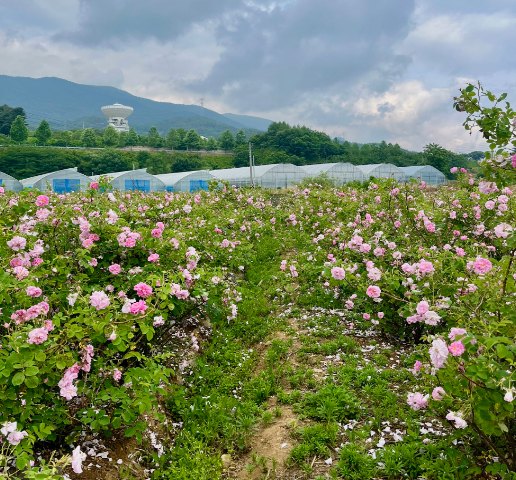
TECHNOLOGY
How we extract, what we record, and which documents come with the material.
METHOD
The same rose yields different things depending on how it is handled. We supply the method that fits your purpose.
Extraction under low temperature and reduced pressure limits the loss of heat-sensitive aroma compounds — for formulations where the scent itself matters.
The classic method yields a clear, stable rose water with little batch-to-batch variation — well suited to high-volume lines.
Concentrating the rose water raises the level of active constituents, so a small dosage can carry the concept.
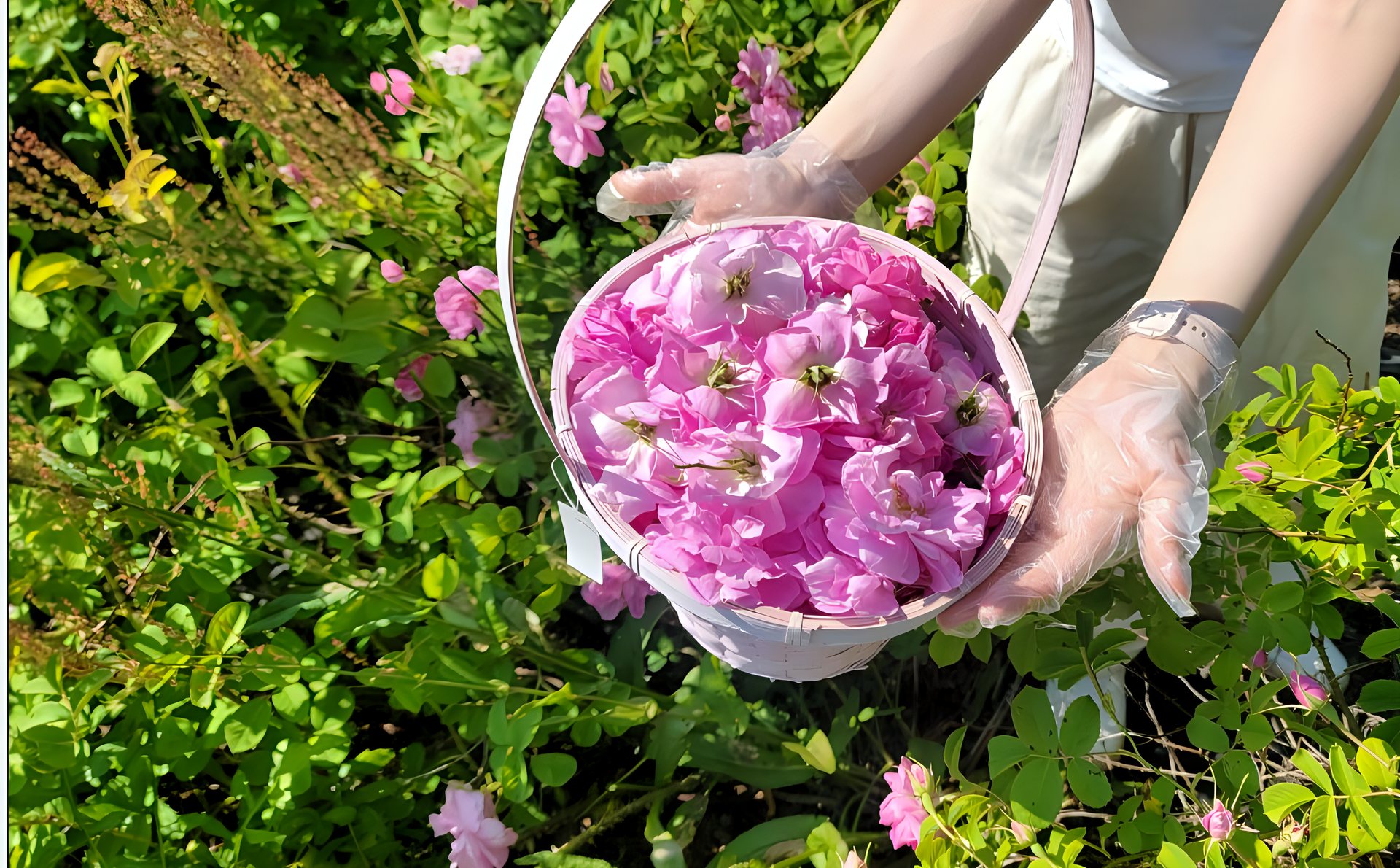
Petals sorted right after harvest are dried at low temperature to hold colour and scent.
QUALITY
Checked and recorded in four stages.
QC 01
Petals are checked for foreign matter and damage during sorting.
QC 02
Input quantity, temperature and time are logged for every batch.
QC 03
Appearance, pH and microbiological items are managed.
QC 04
Packaging and labelling are verified, then released with the report.
PRODUCTION
Managed in five stages, from material preparation through to packing and release.
STEP 01
The condition of the harvested rose is checked, and foreign matter and damaged flowers are removed.
STEP 02
LT is extracted under low temperature and reduced pressure; SD is produced by steam distillation.
STEP 03
Vapour from the process is cooled and condensed to recover the rose water.
STEP 04
Each production batch is checked against the ingredient specification and the result recorded.
STEP 05
Prepared to the pack size for each product, then released after checking labelling and packaging.
LT
SD
DOCUMENTS
We keep the documents your review process needs — tell us which ones and we will send them together.
Appearance, pH, specific gravity and pack size, in one document.
Batch test results, issued with each shipment.
Safety information for handling, storage and transport.
Confirms cultivation in Pyeongchang and production in Korea.
A summary of the flow from harvest to filling.
Samples and small production lots for formulation testing.
CERTIFICATES
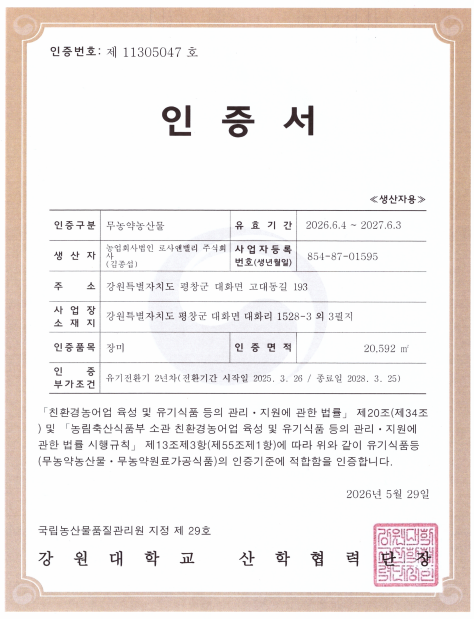
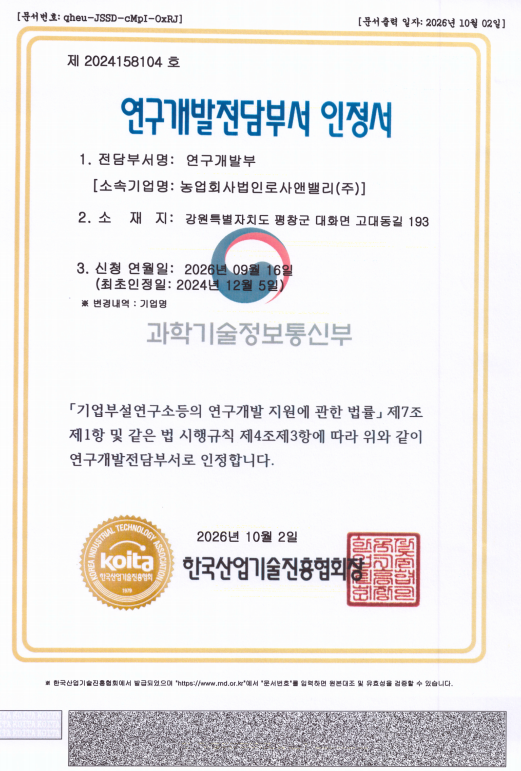
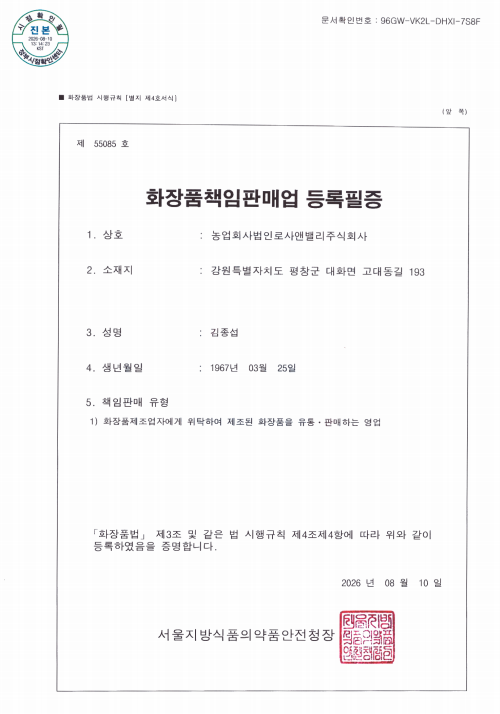
Certificates held for cultivation, research and our cosmetics business.
Tell us your formulation and required volume. Our team replies within two business days with specifications and test reports.